Garage Door Reverses Before Touching the Floor: Common Causes in Smyrna TN
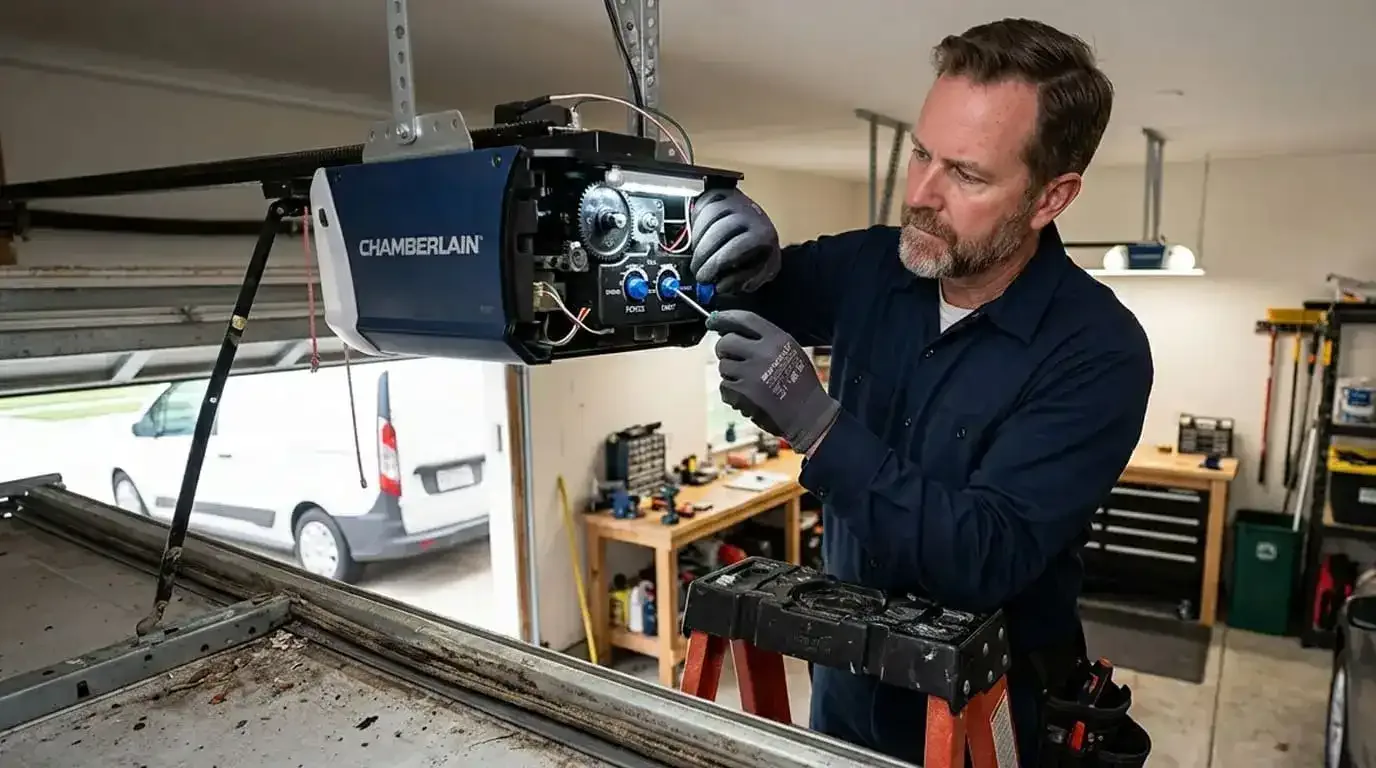
Garage door reverses before closing Smyrna TN is one of the more frustrating patterns homeowners run into, since the door looks like it is about to shut properly and then kicks back open in the last few inches. In most cases the cause is not a blocked photo eye sensor at all. It is either an opener's force or down limit setting tuned too sensitive, a travel limit that stops the door just short of the floor and reads that resistance as an obstruction, or physical drag near the bottom of the track from worn weatherstripping, a bent rail, or a bottom roller that has started to bind. A technician can usually tell which of the three it is within a few minutes just by watching exactly where in the cycle the reversal happens.
Why the Point of Reversal Tells You Almost Everything
Garage door openers, whether they run a chain drive, belt drive, or screw drive mechanism, are built around a safety principle called obstruction detection. If the motor senses more resistance than expected at any point in the travel, it interprets that as something in the way and reverses the door rather than continuing to press down. A door that stops and reverses the instant it starts closing usually points to a photo eye problem. A door that reverses consistently in the same spot, right at the floor, points somewhere else entirely, almost always to the force setting, the limit adjustment, or friction introduced in the final inches of travel. That distinction matters, because chasing sensor alignment on a door that is actually a limit or force issue wastes time and never solves it.
The Down Force Setting Is Tuned Too Sensitive
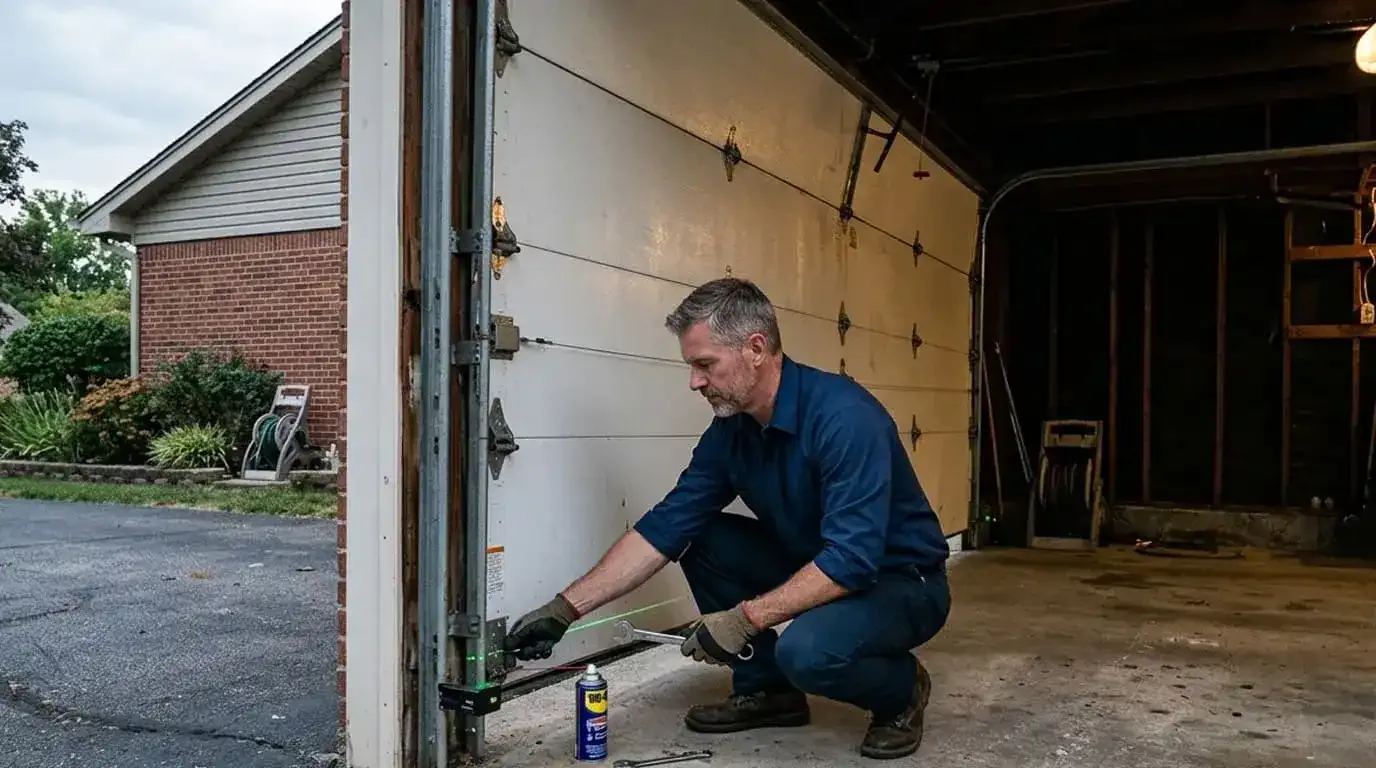
Every modern opener, including LiftMaster, Chamberlain, and Genie models, has an adjustable force setting that controls how much resistance the motor tolerates before it assumes an obstruction and reverses. That setting exists to meet federal entrapment prevention requirements, but it can be dialed in too tight during installation or drift over years of use. When the force sensitivity is too high, the ordinary resistance of the door's weatherstripping compressing against the concrete floor gets misread as a person or object underneath the door, and the opener reverses out of caution. This is one of the single most common reasons a door reverses in the exact same spot every single time.
The Travel or Down Limit Is Miscalibrated
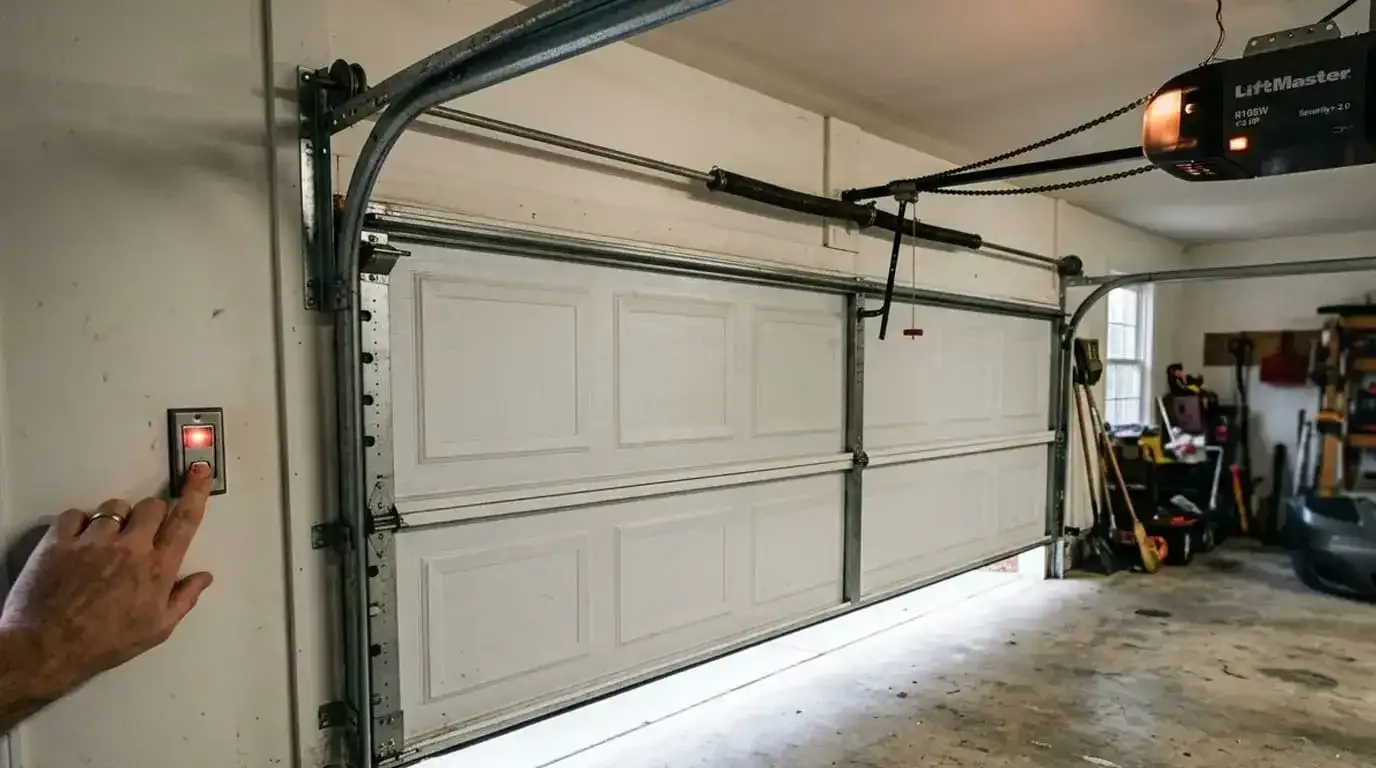
Separate from the force setting, openers also have a travel limit that tells the motor how far to run before it considers the door fully closed. If that limit is set a little short, the motor stops driving the door downward before it has actually reached the floor, at which point the door is still under tension against the opening. The system reads that tension as resistance and reverses, even though nothing is actually blocking it. This tends to show up gradually as seasonal temperature swings in Middle Tennessee cause the door panel and track to expand and contract slightly, nudging a previously correct limit setting out of calibration.
Worn or Pinched Weatherstripping
The rubber seal running along the bottom edge of the door is designed to compress slightly against the floor to block drafts, pests, and water. Over time, especially with Rutherford County's humid summers, that seal can harden, crack, or fold under itself instead of compressing evenly. A folded or brittle seal creates uneven resistance exactly where the opener expects a smooth, predictable stop, which is often enough to trip the reversal on its own, independent of any sensor or setting issue.
A Slightly Bent Track Near the Bottom
Tracks that get bumped by a car bumper, a bike, or a ladder rarely bend across their entire length. The damage is usually localized to a few inches, and if that section happens to sit near the floor, the door will glide freely for most of its travel and only encounter resistance in the final stretch, which looks identical to a force or limit problem from the homeowner's side. Running a hand along both tracks near the floor, feeling for any spot where the metal pinches inward, usually identifies this quickly.
Something Sitting Directly on the Threshold
Small debris that would not register as an obvious obstruction, a rock, a chunk of mulch, even a buildup of dried mud, can sit exactly on the threshold line where the door needs to seat. Since this sits right at the point of contact, the door will travel its full expected path and then get stopped by the debris at the very last moment, producing the same late-cycle reversal pattern as a limit or force problem. Sweeping the threshold clear is worth doing before assuming anything mechanical is wrong.
Do Not Rule Out the Photo Eye Sensors Entirely
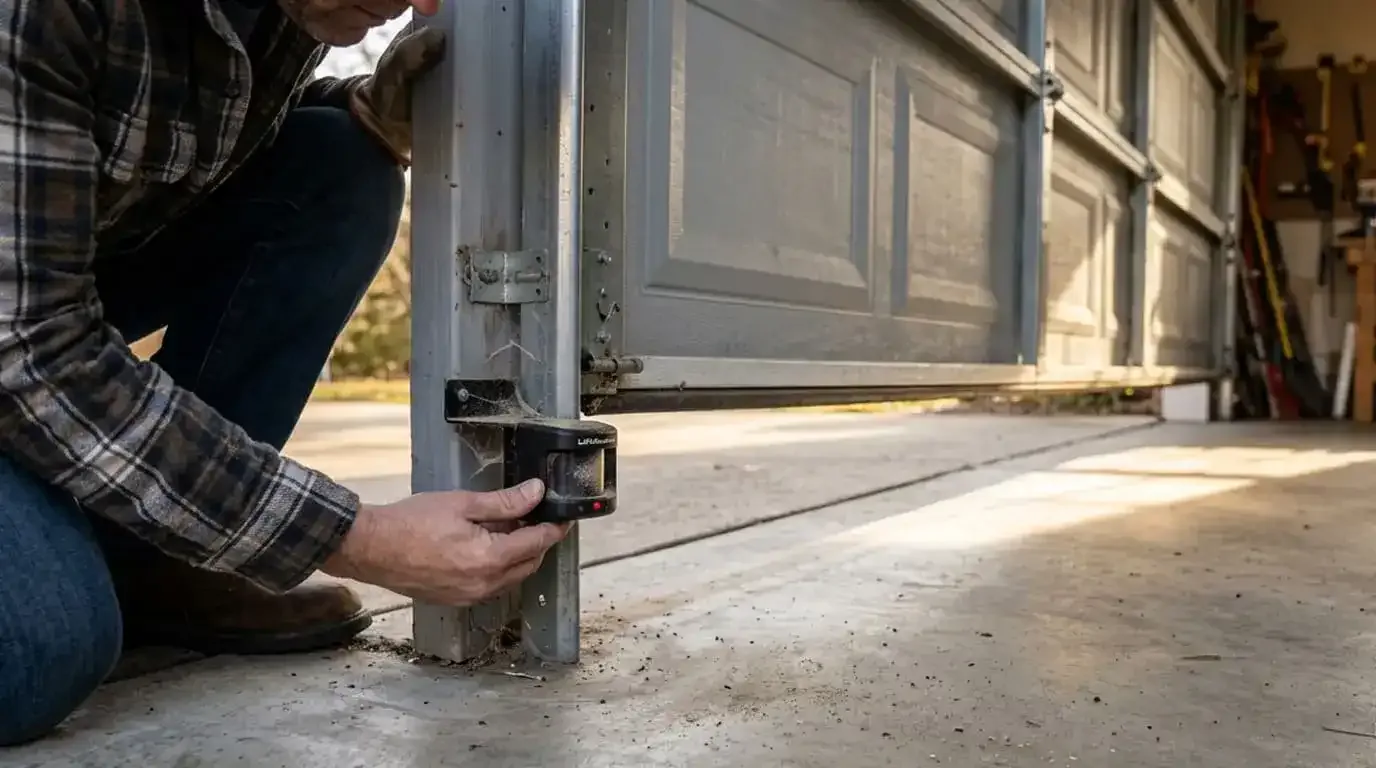
While a reversal that happens consistently at the floor usually is not a sensor issue, it is still worth a quick check, since a sensor that has drifted just slightly out of alignment can produce inconsistent results depending on the angle of afternoon sunlight or a light coating of dust. If the reversal point seems to vary slightly from one cycle to the next rather than happening at the exact same spot every time, that inconsistency points back toward the sensors rather than a fixed mechanical cause.
Why This Safety System Exists in the First Place
It can be tempting to see a door that reverses unnecessarily as purely an annoyance, but the obstruction detection system behind it exists for a serious reason. Automatic residential garage door operators sold in the United States are required to meet CPSC's garage door opener safety standards, which mandate this exact kind of force limiting and auto-reverse behavior to prevent entrapment, particularly for children and pets. The correct fix for an overly sensitive door is never to disable or loosen that protection to stop the reversing, it is to find and correct the actual mechanical cause so the door can close reliably without needing the safety margin reduced.
When to Bring in a Professional
Adjusting force and limit settings correctly requires understanding how the two interact, since changing one without checking the other can trade a reversal problem for a door that no longer detects real obstructions properly, which is a genuine safety concern rather than just an inconvenience. If you have checked the threshold, felt along the track for pinch points, and inspected the weatherstripping without finding an obvious cause, our garage door opener repair specialists serving Murfreesboro can isolate the exact cause using diagnostic steps that go beyond what is practical to replicate at home, and adjust the settings correctly the first time.
Getting a Lasting Fix in Smyrna TN
A door that reverses right before closing rarely fixes itself, and forcing it closed manually or holding the button down defeats the entire purpose of the safety system built into the opener. Murfreesboro Garage Door Pro's technicians work in Smyrna regularly and know the specific patterns local homes run into, from seasonal track expansion to weatherstripping that wears faster in certain sun exposures, so the fix holds instead of needing to be repeated every few months.
Frequently Asked Questions
Why does my garage door reverse right before it touches the floor?
This usually means the opener's force or travel limit setting is too sensitive, or something near the bottom of the track, worn weatherstripping, a bent rail, or debris on the threshold, is creating resistance the opener misreads as an obstruction.
Is it safe to just adjust the force setting myself to stop it?
Adjusting force settings without understanding how they interact with the travel limit can reduce the door's ability to detect real obstructions, which is a genuine safety risk rather than a simple fix.
How do I know if it's a sensor problem or a limit problem?
A reversal that happens consistently at the exact same point every cycle usually points to a limit, force, or mechanical cause. A reversal that varies from cycle to cycle points more toward the sensors.
Can weather cause a garage door to start reversing when it didn't before?
Yes. Temperature swings cause the door panel and track to expand and contract slightly, which can nudge a previously correct limit setting out of calibration over time.
Still Having Trouble With a Door That Won't Close?
Whether it's a sensitive force setting, a worn seal, or a track that's just slightly off, Murfreesboro Garage Door Pro brings 20 years of experience and a written price before any repair begins.
Call (615) 706-3471 for Same-Day Diagnosis