What to Do When Your Garage Door Won't Close All the Way in Murfreesboro TN
Quick Answer
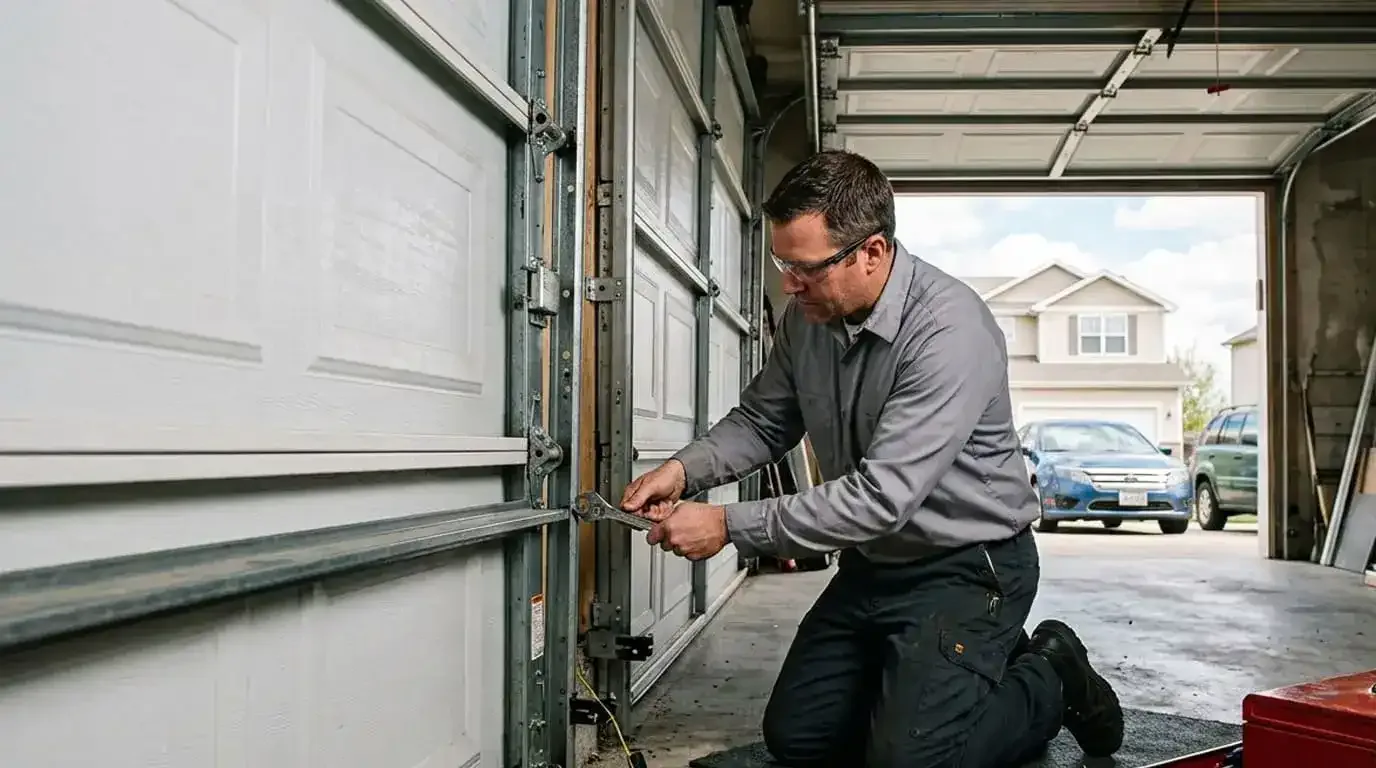
Garage door won't close Murfreesboro TN is one of the most common searches we see right after a storm rolls through Rutherford County, and in almost every case the fix comes down to one of five things. A dirty or misaligned photo eye sensor is the most frequent culprit, followed by something small blocking the sensor beam, a worn roller or bent track, an opener's limit or force setting that has drifted out of adjustment, or a lock that got engaged by accident. Start with the two black sensor eyes mounted near the bottom of the tracks, since a stray leaf, a spider web, or a bump from a ladder causes more failed closes than anything else on this list. If the sensors are clean, aligned, and still lit steady, walk the length of the track looking for anything the door might be pressing against, then check whether the opener needs its close limit reset. Most homeowners can rule out three of these five causes in about ten minutes, using nothing more than a flashlight.
How This Guide Is Different
Search Murfreesboro TN for garage door help and you will find a long list of companies competing for the same customers, from national names like A1 Garage Door Service to established local shops such as Aaron's Garage Doors, Crawford Door Sales, BT1 Garage Door Company, Elite Garage Doors and Services, and Northern Door Company. Most of their websites cover the same ground: a page on broken springs, a page on cable repair, a general troubleshooting list. What tends to get skipped is this specific symptom, a door that starts to close and then stops, reverses, or refuses to move at all, since that behavior is almost never caused by a spring problem in the first place.
This guide walks through the actual electrical and mechanical reasons a door stalls partway down, in the order a technician would actually check them, so you can either solve it yourself in a few minutes or know exactly what to describe when you call for help.
Check the Photo Eye Sensors First
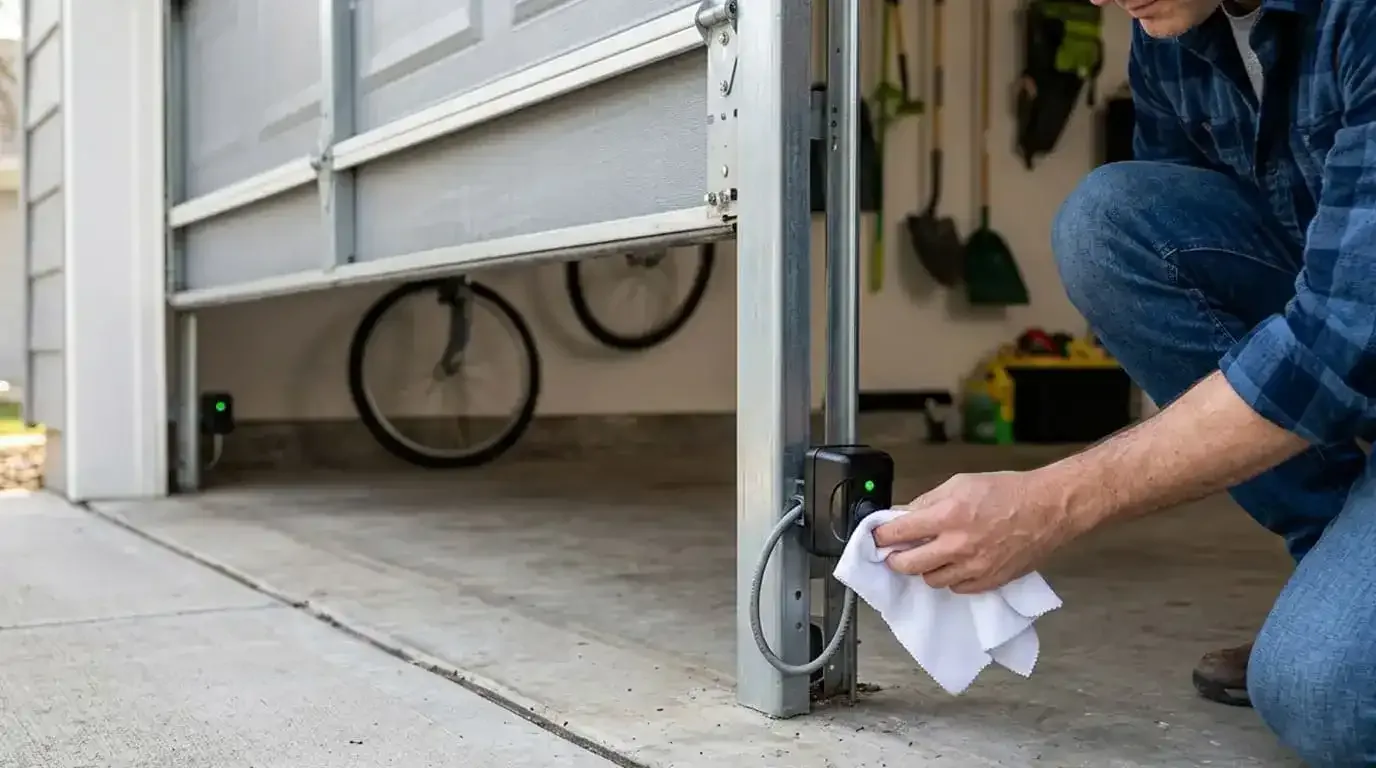
Every residential opener built since the mid 1990s uses a pair of photo eye sensors, small plastic boxes mounted a few inches off the ground on either side of the door track, aimed at each other so they form an invisible beam across the opening. If anything breaks that beam while the door is closing, whether it is a real obstruction or just dust and moisture fogging the lens, the opener assumes something is in the way and reverses the door. On LiftMaster and Chamberlain units, a small LED on each sensor should glow solid, not flicker, when everything is aligned correctly, and Genie openers use a similar setup with slightly different indicator colors. Wipe both lenses with a soft cloth, confirm neither sensor has been knocked out of position by a stray basketball or a garden hose, and make sure sunlight is not hitting one of them directly in the early morning or late afternoon, since strong glare can trick the sensor into a false reading.
Look for Something Blocking the Track or the Beam
Once the sensors check out, look lower. Gravel, a child's toy, a garden tool leaned against the frame, even a buildup of leaves can sit low enough to break the sensor beam without being obviously in the way of the door itself. Walk both tracks from the top of the opening down to the floor and clear anything you find. If the door was working fine the day before and suddenly will not close, this is worth checking before anything mechanical, since it is the fastest fix on this entire list.
Inspect the Rollers and Track for Damage
If the sensors are clear and nothing is blocking the beam, the next likely cause is physical. Rollers wear out over years of use, and a worn or cracked roller can cause the door to bind partway through its travel, which some openers interpret the same way they interpret a blocked sensor, as resistance, so they reverse. A bent section of track does the same thing, often after a door gets bumped by a car bumper or a ladder. Look along both tracks for any spot where the metal pinches inward or where a roller looks flat on one side instead of round. This kind of damage rarely fixes itself and tends to get worse each time the door cycles.
Check the Opener's Limit and Force Settings
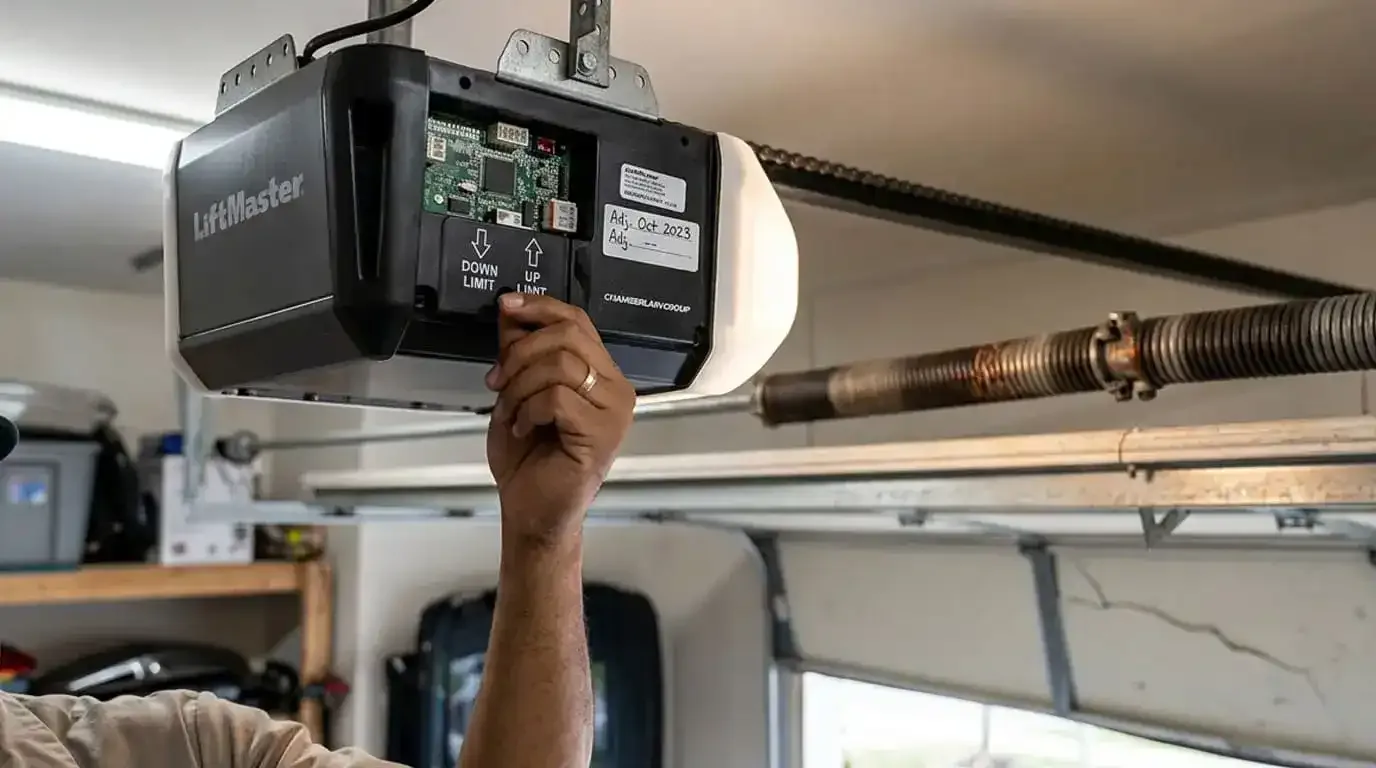
Garage door openers have an internal setting that tells the motor exactly how far to travel before it considers the door fully closed. That limit can drift over time, and Middle Tennessee's swing between humid summers and cold snaps makes it drift faster than milder climates, since the door itself expands and contracts slightly with temperature. When the limit is set a little too short, the opener stops the door before it actually reaches the floor and treats that as normal. Most LiftMaster, Chamberlain, and Genie models have a labeled adjustment screw or a menu setting for this, but getting it wrong in the other direction can cause the door to keep pushing against the floor, which strains the motor and the torsion springs above the door. This is one of the few fixes on this list we recommend having a professional confirm rather than guessing at, since an incorrect force setting is a genuine safety issue, not just an inconvenience.
Rule Out a Manual Lock or Vacation Mode
It sounds obvious until it happens to you. Many doors have a manual slide lock near the handle, and some opener remotes have a vacation or lock mode that disables the motor entirely. Both can make a door appear to stop closing when it is actually just refusing to engage. Check the lock lever on the inside of the door and glance at the wall control panel for a lit lock icon before assuming the problem is mechanical.
When the Issue Is Electrical
If sensors, track, and settings all check out and the door still will not close, the remaining suspects are usually electrical: a failing logic board inside the opener housing, a remote that has developed interference, or wiring to the sensors that has been chewed, pinched, or corroded. These are not weekend projects. Federal safety rules exist specifically because a garage door opener that misbehaves electrically can fail to reverse when it should, and residential openers sold in the United States are required to meet CPSC's garage door opener safety standards, developed jointly with the Door and Access Systems Manufacturers Association and the National Safety Council. That standard is exactly why the auto reverse feature exists in the first place, and it is not something to disable or bypass to force a stubborn door closed.
When to Call In Help
Anything involving the torsion springs, the logic board, or wiring inside the opener housing carries real risk if handled without the right tools, and misdiagnosing the cause often means paying twice, once for the wrong fix and again for the right one. If you have worked through the sensors, the track, and the obvious settings and the door is still misbehaving, that is the point to bring in garage door repair in Murfreesboro TN rather than keep guessing, since a technician can usually isolate the actual cause in one visit using diagnostic steps that are hard to replicate without the equipment.
Keeping It From Happening Again
Once the door is working, a few habits keep it that way. Hose off the sensor lenses every few months, especially after pollen season, and glance at the track any time you notice the door hesitate even slightly before it fully commits to closing. Rutherford County's storms bring debris that can lodge in the tracks overnight, so a quick visual check after severe weather catches most problems before they strand the door halfway open. For anything opener related, from a sensor that keeps drifting out of alignment to a limit setting that will not hold, Murfreesboro homeowners' go-to garage door opener repair team can usually get ahead of a full failure before it happens.
Frequently Asked Questions
Why does my garage door start to close and then reverse?
This almost always means the opener detected an obstruction, real or false, through its photo eye sensors. Dirt, misalignment, or glare are the most common false triggers.
Can I fix a garage door that will not close myself?
Often yes. Cleaning and realigning the sensors, and clearing the track, solves the majority of cases without any tools or technical knowledge.
Is it safe to force the door closed if the sensors keep stopping it?
No. The auto reverse feature exists to prevent entrapment, and disabling or bypassing it removes a safety mechanism required by federal standards.
How much does it cost to fix a garage door that will not close in Murfreesboro TN?
It depends entirely on the cause. A sensor realignment is often a quick, low cost visit, while a bent track or failing logic board costs more, since parts are involved.
Still Stuck With a Door That Won't Close?
If you've worked through the sensors, the track, and the settings and the door is still misbehaving, it's time to stop guessing. Murfreesboro Garage Door Pro brings 20 years of experience and a written price before any repair begins.
Call (615) 706-3471 for Same-Day Diagnosis