Garage Door Opener Making Grinding Noise in Franklin TN? Here's Why
That grinding sound your garage door opener makes every time it opens or closes isn’t something to shrug off. It usually means one specific part inside the motor unit is wearing down, and catching it early is the difference between a simple fix and a full opener replacement. This guide breaks down every real cause of a Garage Door Opener Grinding Noise Franklin TN homeowners deal with, in plain language, so you know exactly what’s happening before you touch a single tool.
Quick Answer
A grinding noise from a garage door opener is most often caused by a stripped plastic drive gear inside the motor unit, worn rollers, a misaligned chain or belt, or a lack of lubrication on moving parts. The fix depends on which part is worn — some issues take ten minutes to solve, others mean replacing the opener’s internal gear kit. If the grinding gets louder or the door starts moving unevenly, it’s time to stop using it until it’s checked.
Why This Grinding Noise Matters
A garage door opener is built to run smoothly. Chain, belt, or screw drive systems all rely on parts moving together with almost no friction. A grinding sound means something inside that system is fighting itself — metal against metal, or a plastic part wearing down against a metal gear it was never meant to touch directly. Ignoring it doesn’t make it go away. It usually gets louder over a few weeks, and the part that’s wearing down keeps wearing down until it fails completely, often at the worst possible time.
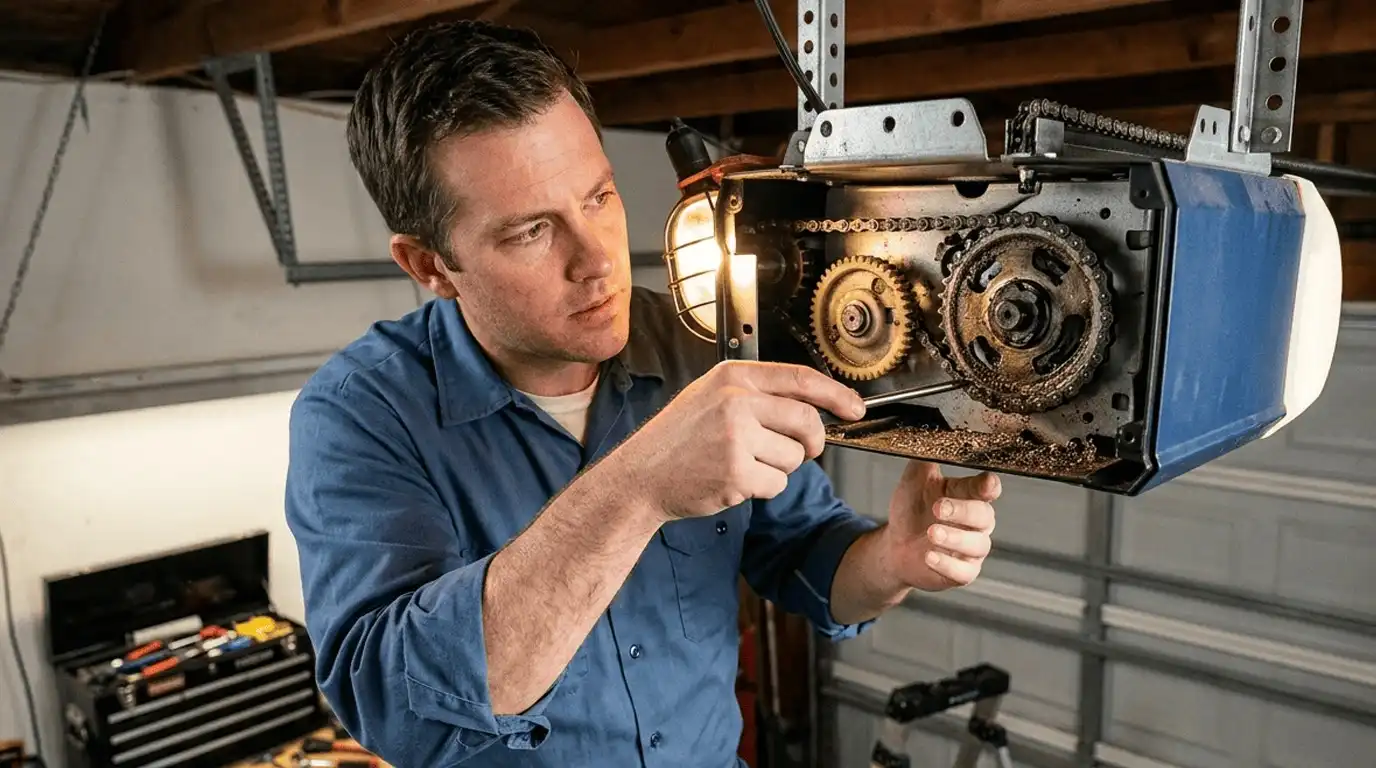
Most Common Cause: The Stripped Drive Gear
Nearly every chain-drive and screw-drive opener has a small plastic gear inside the motor housing, called the drive gear or gear-and-sprocket assembly. It’s designed to be the “sacrificial” part — it wears out before the more expensive metal components do, on purpose, so replacement stays cheap. Over years of regular use, the plastic teeth on this gear slowly shave down.
Once enough teeth are gone, the chain or screw starts slipping against bare metal, and that’s the grinding sound you’re hearing. This part typically lasts eight to twelve years under normal use, so if your opener is in that age range, this is usually the first thing worth checking.
Worn or Dry Rollers
The door itself has its own set of moving parts, and worn rollers are a separate but easily confused cause of grinding. If the rollers running along the vertical track are old, cracked, or simply dry from lack of lubrication, they grind against the metal track instead of rolling smoothly through it.
This sound often shows up specifically as the door starts moving, and it changes pitch as the door travels through the curved section of track. A simple test: watch the rollers move as the door opens. If they look like they’re catching or skipping instead of turning freely, that’s your answer.
Chain or Belt Misalignment
Over time, the chain or belt that pulls the trolley along the rail can loosen or shift slightly off its track. A loose chain slaps and grinds against the rail housing instead of running smoothly through it. This is usually accompanied by a rattling sound in addition to the grinding, and it tends to get worse the longer the door runs. Chain tension is adjustable on most openers, but tightening it incorrectly can cause more strain on the motor, so this is one adjustment worth having a technician confirm rather than guessing.
Lack of Lubrication
This is the cause nobody expects, because it seems too simple, but a large share of grinding noise service calls come down to dry metal parts that just need the right lubricant. The chain or screw rail, the hinges, and the rollers all need a light coat of garage-door-specific lubricant every six months. Regular household oil or WD-40 actually attracts dust and grime, which makes the grinding worse over time instead of better. A proper silicone-based garage door lubricant is the only product that should touch these parts.
Worn Motor Bearings
Inside the motor housing itself, the bearings that let the motor shaft spin freely can wear out from age or from the motor working harder than it should — often because the door itself is out of balance. When bearings wear down, the sound is usually a steadier, higher-pitched grinding that’s present even when the door isn’t moving much resistance-wise. This is one of the trickier causes to diagnose without opening the unit, since it sounds similar to a stripped gear from the outside.
Door Balance Problems
Here’s something most homeowners don’t realize: a garage door opener isn’t supposed to lift the full weight of the door. The door’s springs are supposed to counterbalance almost all of that weight, and the opener just guides the door along the track. If the springs are worn, stretched, or improperly tensioned, the opener’s motor has to work far harder than it was designed to, which accelerates wear on the gear, chain, and bearings all at once.
A grinding opener paired with a door that feels heavy when lifted by hand is often a spring problem wearing out the opener, not the other way around.
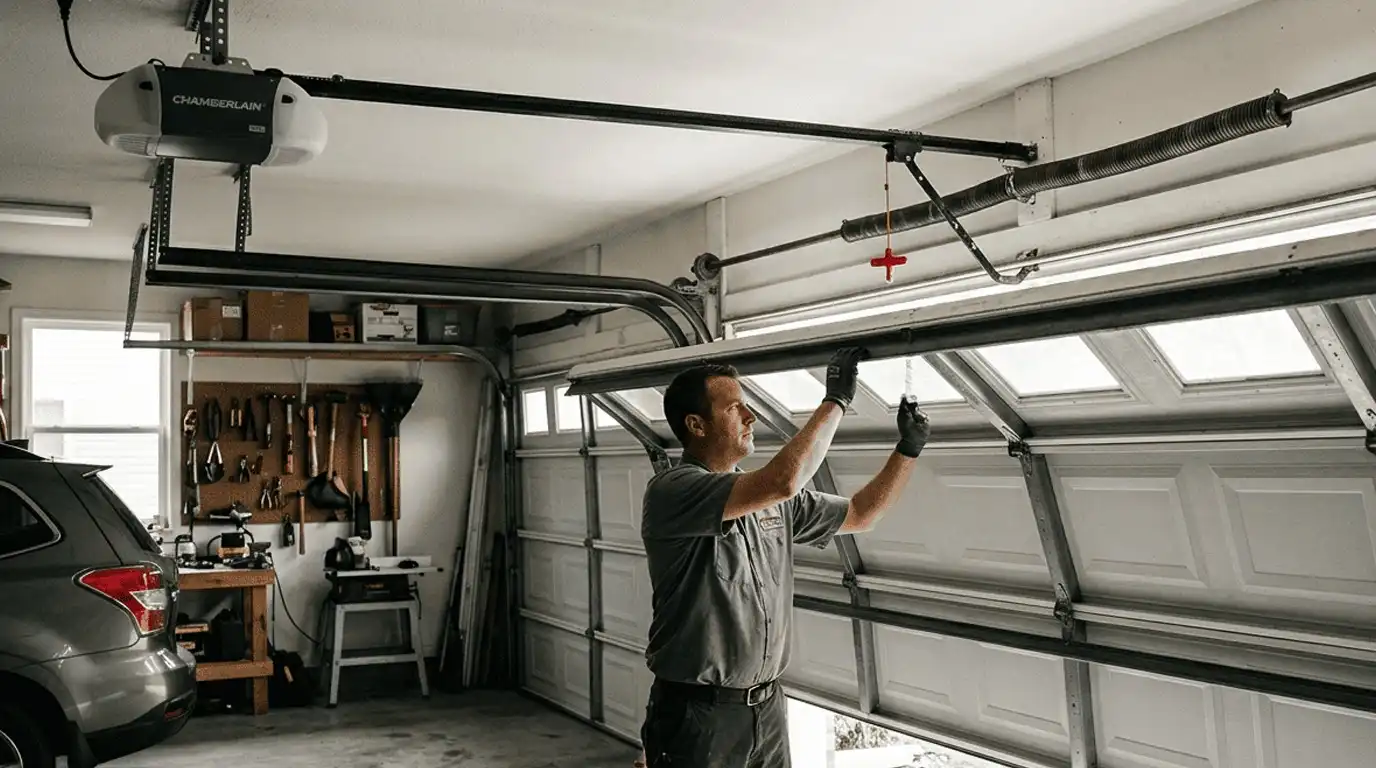
Simple Balance Test
Disconnect the opener using the manual release cord, then lift the door about halfway by hand. It should stay in place on its own. If it falls or shoots upward, the spring tension is off, and that needs a trained technician — spring adjustments carry real injury risk and shouldn’t be attempted without the right tools.
Debris or Damage in the Track
Dirt, leaves, small rocks, or even old grease that’s hardened over time can build up inside the track and cause the rollers to grind as they pass through. This is the easiest cause to check yourself: a flashlight and a visual inspection of the track from top to bottom often reveals the culprit immediately.
Franklin TN Weather and Wear Patterns
Middle Tennessee’s mix of humid summers and cold winter mornings puts extra strain on garage door components. Humidity swells wood door panels and adds resistance the opener has to fight against, while cold mornings stiffen lubricant and metal, making that first grind of the day louder than usual.
Homes in older Franklin neighborhoods with original builder-grade openers tend to see gear wear earlier than newer installs, simply due to age and years of temperature cycling. If the noise has been building for a few weeks and you’d rather have it looked at than keep guessing, Call (615) 706-3471 for a quick phone diagnosis before it turns into a bigger repair.
DIY Fixes You Can Try First
- Apply a silicone-based garage door lubricant to the rollers, hinges, and rail.
- Tighten any visibly loose bolts or brackets on the rail and motor mount.
- Clear visible debris from the track using a flashlight and a dry cloth.
- Run the balance test described above to rule out a spring issue.
- Listen for exactly where the sound is coming from — the motor unit itself, or somewhere along the track.
For manufacturer-backed lubrication schedules, part inspection checklists, and general upkeep recommendations, homeowners can also reference the DASMA Opener Maintenance Tips, published by the door and access systems industry association.
When the Noise Means It's Time to Call a Pro
Some causes are safe for a homeowner to check. Others aren’t. Call a technician if the grinding is paired with a door that feels heavy or uneven when lifted manually, if the noise is coming from inside the motor housing itself, if the chain or belt looks visibly loose or frayed, or if the sound has gotten noticeably louder over just a few days rather than weeks.
These patterns usually point to a spring, gear, or bearing issue that needs the right tools and training to fix safely. For dependable Garage Door Opener Repair Franklin TN homeowners can count on, a same-day inspection is usually the fastest way to know exactly what’s wearing out before it fails completely.
What a Repair Typically Involves
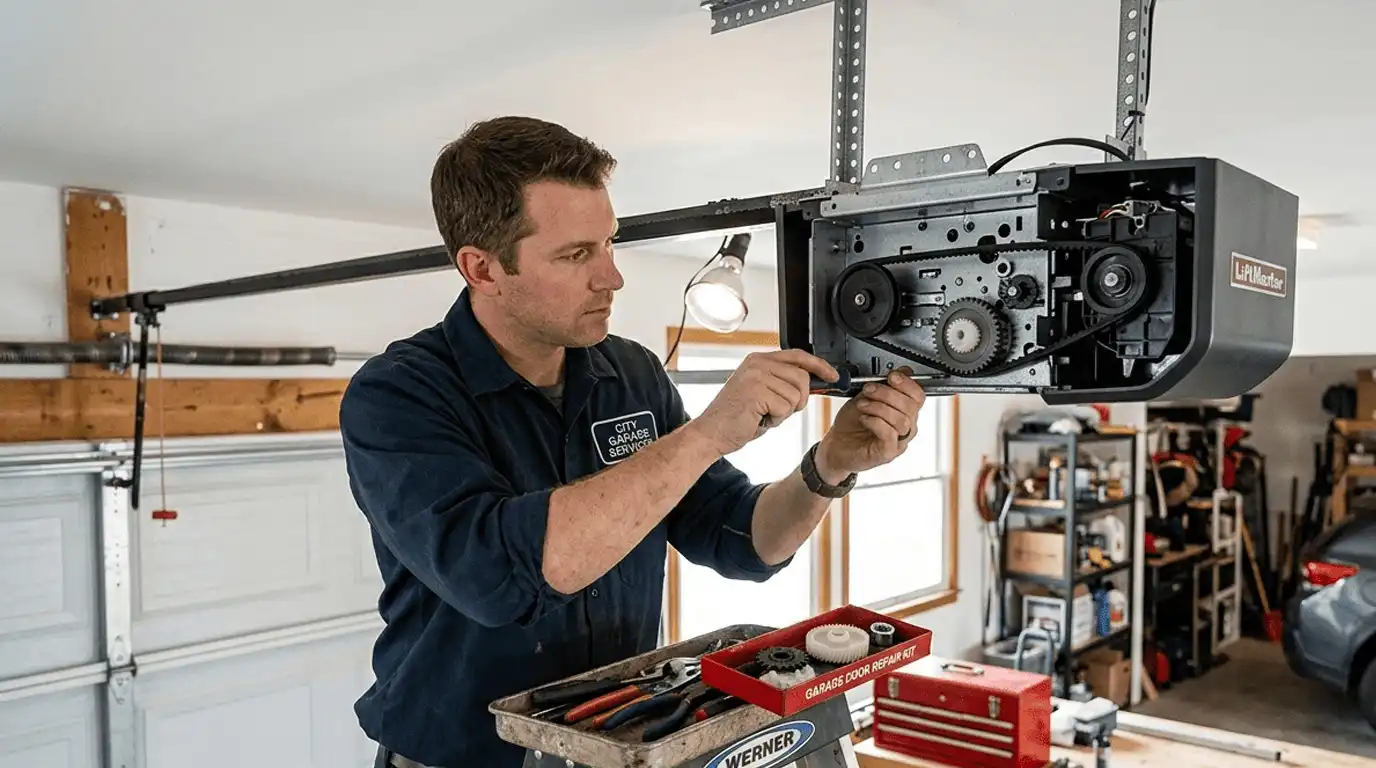
Most grinding-noise repairs fall into one of three categories: a gear-and-sprocket kit replacement inside the motor unit, roller replacement along the track, or a chain/belt re-tensioning and alignment. None of these require replacing the entire opener in most cases — the motor itself tends to outlast the smaller wear parts by years, as long as the underlying cause gets addressed instead of just muffled.
Frequently Asked Questions
Why is my garage door opener suddenly making a grinding noise?
The most common cause is a worn plastic drive gear inside the motor unit, though dry rollers, a loose chain, or a door balance issue can all produce a similar sound.
Is a grinding garage door opener dangerous?
It’s not immediately dangerous, but it usually signals a part that’s failing. If it’s linked to a door balance problem, continued use can put unsafe strain on the springs and cables.
Can I fix a grinding garage door opener myself?
Lubrication, tightening loose hardware, and clearing track debris are safe DIY steps. Gear replacement, spring adjustments, and bearing issues should go to a trained technician.
How much does it cost to fix a grinding garage door opener?
Cost depends on the cause — a lubrication or minor adjustment is inexpensive, while a gear kit or roller replacement runs higher. A phone diagnosis can usually narrow this down before a visit.
Does WD-40 fix a grinding garage door opener?
No. WD-40 attracts dust and dirt, which tends to make grinding worse over time. A silicone-based garage door lubricant is the right product for this job.
How often should a garage door opener be lubricated?
Every six months is the general recommendation, though homes with heavier use or more temperature swings may benefit from more frequent lubrication.
Don't Let a Small Grind Turn Into a Bigger Repair
A grinding garage door opener rarely fixes itself, and the part that’s wearing down keeps wearing down the longer it runs. Catching it early is usually the difference between a simple adjustment and a full gear or roller replacement. Request Service Now and get the exact cause identified before it turns into a stuck door on a Monday morning. Call (615) 706-3471 for a free phone diagnosis today.